
Imagine a Fortune 500 manufacturer saving $2.3M annually by transferring just 30% of their data processing to the edge. Yet, 67% of CTOs admit they can’t calculate when edge computing economically beats the cloud. In this article, you’ll gain access to a complete decision framework combining real-world cost calculations, latency thresholds, and implementation timelines. By the end, you’ll be equipped to make an informed choice between edge and cloud architectures based on measurable business outcomes. Dive in to explore the core architecture differences, total cost analysis frameworks, latency requirements, and more.
Edge Computing vs Cloud Computing: Core Architecture Differences
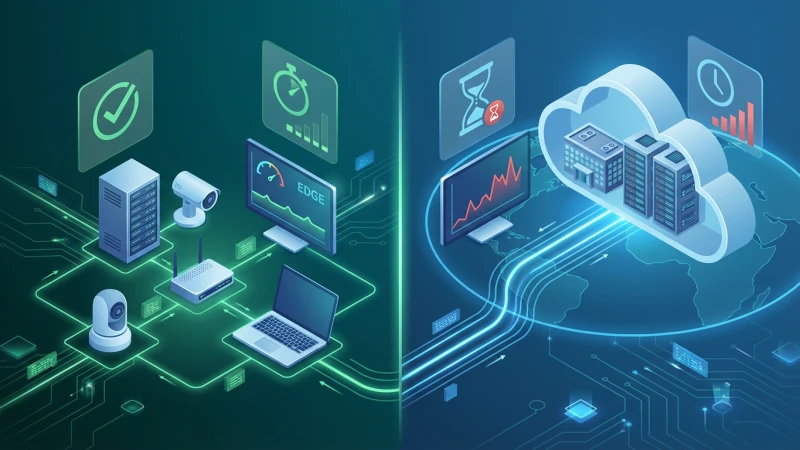
Let’s start with the fundamental differences between edge computing and cloud computing. The key lies in where the data processing occurs. In edge computing, data processing happens at or near the source, your devices and sensors. Cloud computing, however, relies on remote servers hosted on the internet to perform this task. This basic distinction leads to variations in infrastructure ownership, scalability patterns, and security boundaries.
| Feature | Edge Computing | Cloud Computing |
| Processing Location | At or near data source | Remote data centers |
| Infrastructure Ownership | Decentralized, often owned by user | Centralized, owned by service provider |
| Scalability | Limited by local resources | Virtually unlimited |
| Security Boundaries | Within local network | Defined by cloud provider |
Scalability in edge computing is generally constrained due to its reliance on localized resources, whereas cloud computing offers virtually boundless scalability by use massive global data centers. Security also varies significantly. Edge computing often maintains security within local networks, while cloud security boundaries are dictated by the cloud provider.
The $50,000 Question: Total Cost Analysis Framework
When it comes to deciding between edge computing and cloud solutions, cost is a critical factor. Let’s break down the hidden costs of edge deployment versus the scaling cost curves of cloud services. A complete total cost of ownership (TCO) analysis is indispensable. Imagine factoring in variables like hardware costs, network bandwidth, operational expenses, and potential downtime risks over a five-year period.
| Company Size | Edge Deployment Cost | Cloud Deployment Cost | 5-Year TCO |
| Small (up to 50 employees) | $100,000 | $50,000 | $250,000 |
| Medium (51-200 employees) | $250,000 | $150,000 | $675,000 |
| Large (200+ employees) | $500,000 | $300,000 | $1,500,000 |
For example, a small company might face an initial edge deployment cost of around $100,000 compared to $50,000 for the cloud. However, factoring in all operational costs and scalability considerations, their five-year TCO could reach $250,000. Understanding these dynamics can lead to more informed financial decisions. For those seeking deeper insights, explore our detailed cost frameworks and analysis models in the Hybrid Cloud Architecture guide.
Latency Requirements: When Milliseconds Matter Most
Latency is a important consideration in the edge computing vs cloud debate. If milliseconds are important, choosing the right architecture can make or break your application. Different industries have varying latency thresholds. For instance, autonomous systems demand response times below 5 milliseconds, whereas e-commerce can tolerate up to 500 milliseconds delay.
| Industry | Maximum Acceptable Latency | Typical Cloud Latency | Typical Edge Latency |
| Autonomous Vehicles | 5 ms | 100 ms | 1-10 ms |
| Augmented Reality | 20 ms | 80-100 ms | 5-20 ms |
| Smart Manufacturing | 50 ms | 80 ms | 5-50 ms |
In real-time applications such as autonomous vehicles, processing data at the edge ensures the quickest response. Conversely, cloud computing may introduce latency due to network distances. Decision-making should factor in the specific latency requirements of the industry and application to choose effectively between edge and cloud. Our Computer Vision in Manufacturing article highlights how edge computing can improve real-time processing outcomes.
Edge Computing Benefits: 7 Scenarios Where Edge Wins
Edge computing shines in scenarios where specific requirements are met. For instance, consider autonomous systems needing rapid processing or environments with constrained bandwidth. Also, edge solutions support data sovereignty by keeping information within local jurisdictions, important for industries facing strict compliance regulations.
Here are seven scenarios where edge computing typically outperforms cloud solutions:
- Autonomous systems requiring sub-5ms latency
- Bandwidth-constrained locations, such as offshore oil rigs
- Data sovereignty and compliance needs in finance or healthcare
- Remote, offline operations where cloud connectivity is unreliable
- Processing large volumes of data close to the source to reduce transmission costs
- Real-time analytics for manufacturing, improve defect detection efficiency
- Devices operating in harsh environments needing ruggedized computation
By evaluating these factors, businesses can not only improve performance but also achieve measurable ROI. Our Big Data Tools article provides further insights into improving your analytics capabilities through edge solutions.
Implementation Roadmap: 90-Day vs 18-Month Timelines
Implementing an edge computing solution requires careful planning, with timelines varying based on the project’s complexity. A phased approach is often optimal, beginning with a pilot program and gradually scaling to full deployment. This roadmap outlines a step-by-step process.
In a 90-day timeline, a company can complete an initial assessment, select appropriate vendors, and launch a pilot. Longer timelines, such as 18 months, involve full-scale deployment, integrating edge solutions into all operational areas, which can significantly mitigate risks.
Hybrid Architecture: The Best of Both Worlds Strategy
For some organizations, a hybrid approach, combining both edge and cloud architectures, offers an optimal solution. This strategy allows for workload distribution, balancing latency-sensitive tasks on the edge with flexible processing power in the cloud.
Implementing a hybrid architecture involves careful consideration of data synchronization, governance frameworks, and security boundary management. This approach can effectively manage high-volume data flows while maintaining the flexibility to offload less critical tasks to the cloud.
Future-Proofing Your Architecture Decision
Technology evolves rapidly, making it important to future-proof your architecture decisions. By understanding technology evolution trends and planning for scalability, you can safeguard your investments against obsolescence. Future-proofing strategies involve regular technology audits, keeping abreast of emerging standards, and ensuring interoperability between edge and cloud components.
For a complete analysis of how to align your strategy with upcoming developments, visit our Hybrid Cloud Architecture article.
FAQ
What is edge computing?
Edge computing processes data at or near the data source. This reduces latency and bandwidth use, enabling faster decision-making by minimizing the distance information must travel.
When to use edge computing vs cloud?
Use edge computing when low latency, data sovereignty, or offline operations are priorities. Cloud computing suits applications needing massive scalability and centralized data management.
What are the main benefits of edge computing?
Key benefits include reduced latency, bandwidth savings, improved data sovereignty, and the ability to function in disconnected environments, critical for real-time applications.
How much does edge computing cost compared to cloud?
Edge computing can have higher upfront costs but may offer long-term savings in bandwidth and latency. Cloud solutions often present lower initial expenses with potential long-term cost increases due to scaling.
Your next step? Dive deeper into your architecture strategy today. Assess your specific business needs and analyze where edge or cloud solutions fit. Then, create a complete plan tailored to your industry’s demands. Discover more on our Computer Vision in Manufacturing page and start change your data processing approach.
The future of data processing lies at the crossroads of edge and cloud solutions. Businesses that adapt quickly to these technological advancements will lead the way. Are you ready to make the move?