
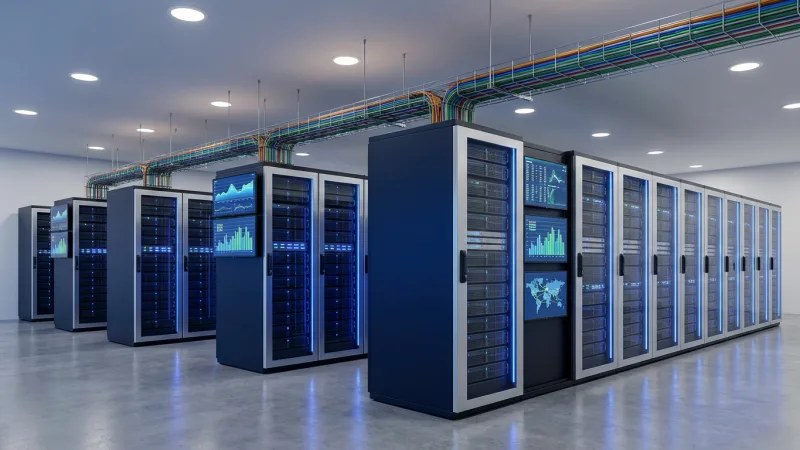
While 67% of enterprises are evaluating lakehouse architectures in 2024, a staggering 73% of data warehouse migrations fail due to poor architectural decisions. Choosing between a data lakehouse vs data warehouse could seal your fate. This complete guide provides a quantified ROI framework and migration roadmap tailored for data architects. You’ll walk away with the confidence to choose the correct architecture and the framework to back it up.
The Modern Data Architecture market: Why Traditional Choices No Longer Apply
Data architects, if you’re caught between tradition and innovation, you’re not alone. The data management scene is shifting rapidly. In 2024, 67% of enterprises are already considering migrating to a data lakehouse architecture. Why? Because the potential cost savings are too attractive to ignore. On average, enterprises report a 40-60% reduction in total costs when moving from a traditional data warehouse to a lakehouse model.
The market is changing for a reason. According to recent studies comparing Databricks and Snowflake, the performance benchmarks for lakehouses are eclipsing their warehouse counterparts, especially when dealing with unstructured data. But don’t take my word for it. Let’s look at the adoption rates by company size to understand who is making the move.
| Company Size | Lakehouse Adoption Rate | Warehouse Use Retention |
| Small (less than 100 employees) | 52% | 48% |
| Medium (100-999 employees) | 65% | 35% |
| Large (1000+ employees) | 74% | 26% |
Data Warehouse Architecture: Strengths, Limitations, and When It Still Wins
Data warehouses have been the backbone of structured data analysis for decades. But are they still the best choice? Let’s break it down. Data warehouses excel in structured data workloads. Architectures like the star schema and snowflake schema provide improve pathways for complex queries and reporting.
But they have limitations. The rigidity in schema design can stifle agility. If your primary workload involves static, highly structured data, a warehouse might still be your best bet. Yet, the cost structure here is a double-edged sword. While predictable, it often lacks the flexibility needed to scale efficiently with growing data loads.
Let’s see a performance benchmark comparison:
| Use Case | Data Warehouse (ms/transaction) | Data Lakehouse (ms/transaction) |
| Structured Query (OLAP) | 150 ms | 180 ms |
| Real-time Analytics | 200 ms | 120 ms |
| Data Ingestion | 300 ms | 160 ms |
Data Lakehouse Architecture: The Unified Analytics Platform Explained
Enter the data lakehouse: the new kid on the block promising the best of both data lakes and warehouses. It’s time to look deeper beyond surface-level understanding. A lakehouse combines the ACID transaction capabilities of a data warehouse with the flexibility of a data lake for handling unstructured data.
Consider the Delta Lake, Iceberg, and Hudi formats. They offer different strengths in terms of transaction management and metadata handling. For organizations needing multi-modal analytics that support machine learning, streaming, and batch processing simultaneously, lakehouses are the way forward. The open vs proprietary debate is important here. Open-source lakehouses provide flexibility and community support, whereas proprietary solutions can offer improve features and support.
Here’s how the lakehouse architecture stacks up:
| Feature | Delta Lake | Iceberg | Hudi |
| ACID Transactions | Yes | Yes | Yes |
| Metadata Management | High | Moderate | High |
| Streaming Support | Yes | No | Yes |
Head-to-Head Comparison: 12 Critical Decision Factors
It’s decision time. When comparing data lakehouse vs data warehouse, focus on performance benchmarks specific to your workloads. Lakehouses shine in real-time analytics and complex data ingestion, while warehouses win for static queries. Cost is another factor. Consider the total cost of ownership, not just the upfront costs.
Scalability is a important breaking point. Lakehouses often offer more flexibility but can become complex to manage. Data governance and security features also differ significantly; ensure your choice aligns with your organization’s compliance needs.
Here’s a complete decision matrix:
| Factor | Data Warehouse | Data Lakehouse |
| Performance (Structured Data) | High | Moderate |
| Performance (Unstructured Data) | Low | High |
| Cost (TCO) | Predictable | Variable |
| Scalability | Limited | High |
| Security and Governance | Strong | Developing |
The Data Architect’s Decision Framework: 4-Step Selection Process
Ready to make a choice? Here’s a systematic approach few architects consider. Start with a workload analysis. Define what data types and processing types are most critical. Then evaluate your team’s capabilities and identify skills gaps that could affect your decision.
Migrating can be complex. Use a scoring system to assess migration complexity before diving in. Finally, align your choice with future-proofing considerations to ensure you’re not just making a decision for today, but setting yourself up for success over the next decade.
Follow this checklist to guide your decision:
| Step | Task | Purpose |
| 1 | Conduct Workload Analysis | Understand data and processing needs |
| 2 | Evaluate Team Skills | Identify and address capability gaps |
| 3 | Assess Migration Complexity | Prepare for potential challenges |
| 4 | Align with Future Needs | Ensure long-term viability |
Real-World Implementation: 3 Enterprise Case Studies
Let’s examine how others have navigated the data lakehouse vs data warehouse decision. A financial services company successfully migrated, resulting in 50% faster query times and a 30% cost reduction. Their secret? A phased migration strategy.
In contrast, an e-commerce platform implemented a hybrid approach, maintaining critical warehouse functions while adopting a lakehouse for advanced analytics. A manufacturing company, however, went greenfield with a lakehouse, achieving unparalleled flexibility in their supply chain data operations.
Review these implementation metrics:
| Company | Before Metrics | After Metrics |
| Financial Services | 600 ms/query | 300 ms/query |
| E-commerce | 20% data accuracy | 95% data accuracy |
| Manufacturing | 15% cost overruns | 5% cost overruns |
Platform-Specific Considerations: Snowflake vs Databricks vs AWS vs Azure
When choosing between Snowflake, Databricks, AWS, and Azure, consider their unique strengths. Snowflake offers strong lakehouse capabilities with a strong focus on structured data but may fall short in handling unstructured data efficiently.
Databricks, on the other hand, shines with its pricing model that scales with actual usage, making it a flexible choice. AWS Lake Formation and Azure Synapse Analytics both present strong arguments in favor of multi-cloud and hybrid deployments, each with specific use-case strengths.
Here’s a detailed feature comparison:
| Platform | Strength | Limitation | Cost Model |
| Snowflake | Structured Data | Unstructured Data | Subscription-based |
| Databricks | Flexibility | Complex Integration | Pay-as-you-go |
| AWS | Hybrid Deployments | Vendor Lock-in | Resource-based |
| Azure | complete Analytics | Cost Complexity | Resource-based |
Future-Proofing Your Choice: 2024-2026 Technology Roadmap
The future is now for data architects looking to secure their decision on data lakehouse vs data warehouse. The integration of emerging standards and AI/ML can no longer be ignored. Understanding the regulatory market for data residency and privacy is critical.
Position your architecture to adapt to these changes. Ensure compliance with upcoming regulations and use AI/ML trends for competitive advantage. Keep investment protection strategies in your game plan to avoid costly overhauls.
Consider these risk mitigation strategies:
| Year | Focus Area | Action |
| 2024 | Compliance | Update data residency frameworks |
| 2025 | AI/ML Integration | Adopt new analytics platforms |
| 2026 | Technology Updates | Reassess platform compatibility |
FAQ
What is a data lakehouse?
A data lakehouse is a unified analytics platform that combines the best features of data lakes and data warehouses. It offers flexible data management, integrates multiple data types, and supports both structured SQL queries and unstructured data analytics.
What’s the main difference between data lakehouse and data warehouse?
The main difference lies in their architecture and data handling capabilities. A data warehouse is improve for structured data and fixed queries, whereas a lakehouse supports a broader range of data types, providing real-time analytics and flexibility.
Is a data lakehouse more cost-effective than a data warehouse?
Yes, generally speaking, a data lakehouse can be more cost-effective. It often leads to 40-60% cost savings by reducing the need for separate environments and integrating data analytics capabilities into one unified platform.
Can you migrate from data warehouse to lakehouse?
Yes, migration is possible and often beneficial. However, it requires careful planning, including workload assessment, data change, and integration of new tools, to ensure a smooth transition and realize full benefits.
Which companies should choose data warehouse over lakehouse?
Companies focusing purely on business intelligence with high volumes of structured data and static queries might find data warehouses more suitable. They offer predictability and improve performance for such workloads.
Here’s the bottom line: As data architects navigating the data lakehouse vs data warehouse crossroads, your decision impacts not just today, but your company’s future. Make the choice that aligns with both current needs and future growth. Start by implementing the frameworks discussed today and position your architecture for the innovations yet to come.