
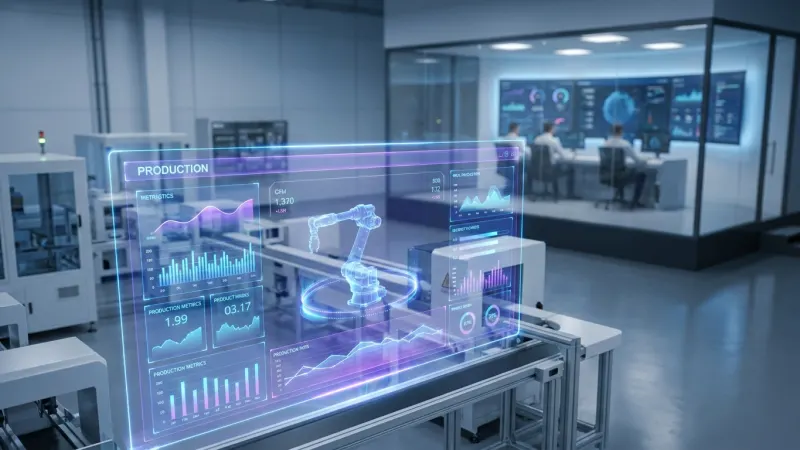
While 89% of enterprises plan digital twin investments by 2025, only 23% have managed to scale beyond pilot projects. Digital twin technology is more than a buzzword, it’s a strategic tool that change operations. Today, we’ll walk through a practical implementation roadmap, complete with real ROI calculations, technology stack decisions, and step-by-step deployment phases that you can use immediately.
Digital Twin Technology Fundamentals: Beyond the Basic Definition
The best approach to understanding digital twin technology is to break it down into its five core components: physical entities, digital counterparts, data connections, analytics, and practical insights. This isn’t just a simulation or an IoT dashboard. A digital twin offers a dynamic, real-time representation of assets, processes, or systems, allowing for advanced analytics and informed decision-making.
| Type | Purpose | Example |
| Descriptive | Represents the current state | Basic equipment monitoring |
| Diagnostic | Analyzes patterns | Fault detection |
| Predictive | Forecasts future states | Predictive maintenance |
Imagine your predictive maintenance system alerts your team of a potential engine failure before it happens, saving you hefty repair costs and downtime. That’s the power of predictive digital twins.
Enterprise Digital Twin ROI Calculator: Quantifying Business Impact
You’ll convince any CFO with numbers, not dreams. On average, digital twin technology can improve operational efficiency by 23%. Using a predictive maintenance model, you could save up to 30% on maintenance costs by preventing failures before they occur.
Let’s break it down into an easy-to-understand ROI formula:
- Operational Cost Savings: Reduce by 15% – 30%
- Equipment Downtime Reduction: Minimize by 30% – 40%
- Time-to-Value: Achieved within 6-18 months, depending on industry
| Industry | Average ROI | Time-to-Value |
| Manufacturing | 25% | 12 months |
| Logistics | 18% | 9 months |
| Healthcare | 21% | 8 months |
With a clear ROI model, the benefits of digital twin technology become tangible, making it easier to justify investments.
Digital Twin Platform Selection: Vendor Comparison Matrix
Choosing the right digital twin platform is important. Comparing Microsoft Azure Digital Twins and AWS IoT TwinMaker reveals several distinctions. Azure offers strong integration with existing Microsoft services, while AWS emphasizes flexibility and scalability.
| Platform | Strength | Weakness |
| Microsoft Azure | smooth integration with Microsoft Suite | Higher cost for enterprise features |
| AWS IoT TwinMaker | Flexible and flexible | Steeper learning curve |
For those considering open-source alternatives, several come with fewer features but offer cost advantages and flexibility. Your decision should hinge on integration capabilities, pricing models, and the specific needs of your enterprise.
Pre-Implementation Assessment: Enterprise Readiness Framework
Before implementing digital twin technology, assess your enterprise’s readiness. Start with a data infrastructure maturity assessment to determine if your current systems can support the influx of data.
- Skills Gap Analysis: Identify necessary skill sets and training requirements.
- Change Management Readiness: Evaluate your team’s ability to adapt to new processes.
use a readiness assessment scorecard to pinpoint areas needing improvement:
| Assessment Area | Current Score | Target Score |
| Data Infrastructure | 3/5 | 4.5/5 |
| Skills and Training | 2/5 | 4/5 |
Armed with this information, you can focus your efforts on closing gaps before implementation begins.
Phase-by-Phase Implementation Methodology: The TWIN Framework
To successfully implement digital twin technology, follow the TWIN methodology. Here’s how it breaks down:
- T-arget Identification Phase: Identify key assets or processes that will benefit the most.
- W-orkflow Integration Phase: improve existing workflows by integrating digital twin insights.
- I-nfrastructure Deployment Phase: Set up the necessary data infrastructure and connectivity.
- N-etwork improve Phase: Fine-tune network performance to ensure smooth data flow.
Let’s examine each phase’s specific deliverables:
| Phase | Key Deliverable |
| Target Identification | Prioritized asset list |
| Workflow Integration | improve process maps |
| Infrastructure Deployment | Complete data architecture setup |
| Network improve | Performance tuning plan |
This phase-by-phase approach ensures a structured, efficient implementation. By systematically working through each phase, you mitigate risks and increase your chances of a successful implementation.
Digital Twin Examples: Real Enterprise Success Stories
Seeing is believing. Consider General Electric’s use of digital twins for their jet engines. By implementing predictive models, they achieved a 15% increase in fuel efficiency, a clear proof of concept.
Siemens, on the other hand, use digital twins to improve manufacturing, reducing downtime by 30%. These are not isolated examples but part of a growing trend that includes smart city implementations.
| Company | Implementation | Outcome |
| General Electric | Jet Engine Fuel Efficiency | 15% Improvement |
| Siemens | Manufacturing improve | 30% Downtime Reduction |
The outcomes are impressive and provide a compelling reason to incorporate digital twin technology into your operations.
Technology Stack Architecture: Building Your Digital Twin Infrastructure
Building an effective digital twin infrastructure requires more than just the right platform. Edge computing capabilities are important to process data close to its source, reducing latency.
Your data architecture, whether a data lake or data warehouse, will depend on your specific needs. Real-time processing is often preferred for digital twins, providing instant insights and responses.
A well-architected technology stack enables efficient data flow and maximizes the utility of digital twin insights.
Data Integration Strategies: Connecting Physical and Digital Worlds
Successful digital twin implementations hinge on effective data integration strategies. Standardizing sensor data using established protocols ensures consistency and accuracy.
Decide whether to employ real-time or batch processing based on the immediacy of the insights required. Real-time is ideal for dynamic systems requiring instant feedback, while batch processing suits less time-sensitive data.
| Integration Approach | Use Case |
| Real-Time Processing | Live monitoring and adjustments |
| Batch Processing | Retrospective analysis and reporting |
Choose your integration approach carefully to ensure your digital twin solution meets your operational needs.
Security and Governance: Protecting Your Digital Twin system
Security in digital twin environments is non-negotiable. Adopt a zero-trust security model, validating every connection and user interaction. Compliance with data privacy laws like GDPR and CCPA is also critical.
Implementing a strong access control framework will protect sensitive data and maintain the integrity of your digital twin systems.
Performance improve: Scaling Your Digital Twin Implementation
After deployment, focus on performance improve. Techniques like latency reduction and model accuracy improvement can significantly improve system performance.
Scaling your implementation involves evaluating cost improve strategies, ensuring you maintain efficiency without inflating costs.
| improve Area | Technique |
| Latency Reduction | Edge computing |
| Model Accuracy | Regular data updates |
| Cost improve | Resource allocation audits |
These strategies ensure your digital twin technology scales effectively, providing ongoing value to your enterprise.
Conclusion
Start today by evaluating your current asset systems for digital twin applicability. Armed with the information presented, you can implement digital twin technology, change your operations and gaining a competitive edge. For more insights, visit Valasys AI Tech. The future of enterprise lies in digital twin innovation, and by acting now, your enterprise stands to lead in this domain.
What is a digital twin? A digital twin is a virtual representation of a physical asset, system, or process. Designed to mimic its real-world counterpart, it allows for real-time monitoring, simulation, and analysis, leading to improved decision-making and operational efficiencies. How to implement digital twins? Implementing digital twins involves the TWIN framework: Target identification, Workflow integration, Infrastructure deployment, and Network improve. These steps ensure a structured approach to digital twin adoption, maximizing benefits and minimizing risks. What are the main benefits of digital twin technology? Digital twin technology offers many benefits including improved operational efficiency, predictive maintenance, reduced downtime, and improve decision-making capabilities. Enterprises can achieve significant cost savings and process optimizations. Which digital twin platform is best for enterprise? The best platform depends on your specific needs. Microsoft Azure Digital Twins is known for smooth Microsoft Suite integration, whereas AWS IoT TwinMaker offers flexibility. Consider factors such as integration needs, scalability, and cost. How much does digital twin implementation cost? Costs vary based on scope and complexity, but they typically range from a few thousand to several million dollars. Factors influencing cost include the scale of implementation, platform selection, and integration requirements. Consider ROI calculations to justify the investment.