
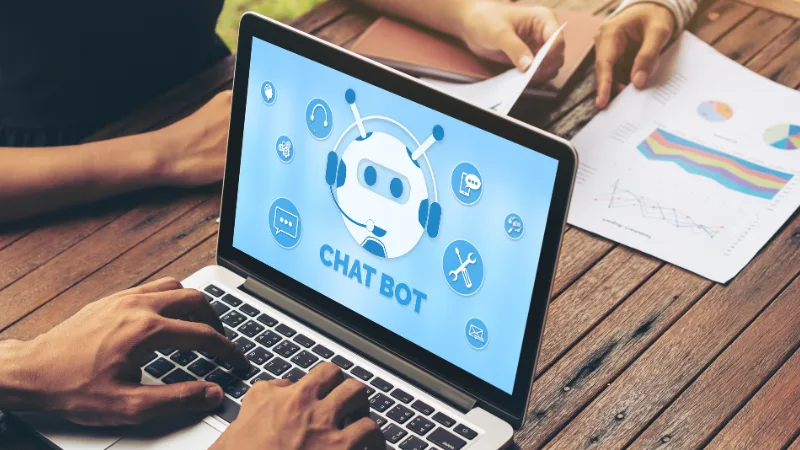
Okay, full disclosure: I’m not a tech wizard. I still panic when my printer blinks with a mysterious red light. But here I am, a self-proclaimed dum-dum, here to explain the magic of an AI chatbot for website, and why it’s not just fancy tech jargon you nod at during meetings. Don’t worry, we’ll keep it simple, like explaining Instagram to your grandma.
First Things First, What’s an AI Chatbot for Website Anyway?
Think of it like this: your website’s open 24/7, but you (presumably) are not. The AI chatbot for website swoops in like the overachieving employee who never clocks out. It greets visitors, answers their questions, points them to the right page, and even collects leads while you’re drooling on your pillow in REM sleep.
At the simplest level, it’s software that talks to people. At the smartest level, it’s like having a customer service rep who’s read all your FAQs and never once needed coffee.
So, Why Businesses Use Chatbots? (a.k.a. Why You Should Care)
Let’s break down the very non-magical, but super important reasons an AI chatbot makes sense:
- Instant Gratification
Customers don’t want to wait. If your FAQ page is a dusty labyrinth, they’ll bail. A chatbot speeds things up: visitors type a question and then boom! Answer delivered in seconds. - More Leads, Less Headache
One might think chatbots are just chatterboxes, but one is wrong. They’re sneaky lead collectors. They ask the right questions (“What’s your email address?”) in a way that feels like conversation instead of interrogation. - Sales Sidekick
An AI chatbot can help recommend products or services based on visitor behavior. It’s like when Amazon suggests that mattress you searched about last month. You didn’t know you needed it so desperately but now, it looks like a tantalizing purchase. - Lower Costs, Higher Smiles
Instead of hiring a full-time human army to handle repetitive queries (like “what are your business hours?” x1000), you let the chatbot do the grunt work so the employees who you’re paying, can focus on the complex, juicy stuff.
How Do You Know If It’s Right for You?
At the middle of the funnel, you’re bound to have some skepticism. You’ve read the case studies, seen the screenshots, maybe even chatted with one of these bots yourself, but the real question is the one you’re quietly asking: “Okay, but will this actually make a difference for my business?”
If your website already brings in traffic but too many visitors leave without doing anything meaningful, a chatbot acts like a polite guide who stops them at the door and says, “Hang on, can I help you find what you came for?” That simple interaction keeps people moving forward instead of wandering away.
If customer service is eating too much of your budget, a bot can take the repetitive “where’s my order” or “how do I reset my password” questions off your team’s plate. Your agents then spend their time solving real issues instead of copy-pasting the same response for the nth time.
And for sales teams, it’s often the warm-up that matters most. Instead of chasing cold, uninterested leads, a chatbot prequalifies visitors and sends over prospects who are already engaged. This means fewer dead ends and more momentum for the teams.
Will this usually be right for everyone? No. But if any of these sounds familiar, it’s probably right for you.
But Aren’t Chatbots Annoying?
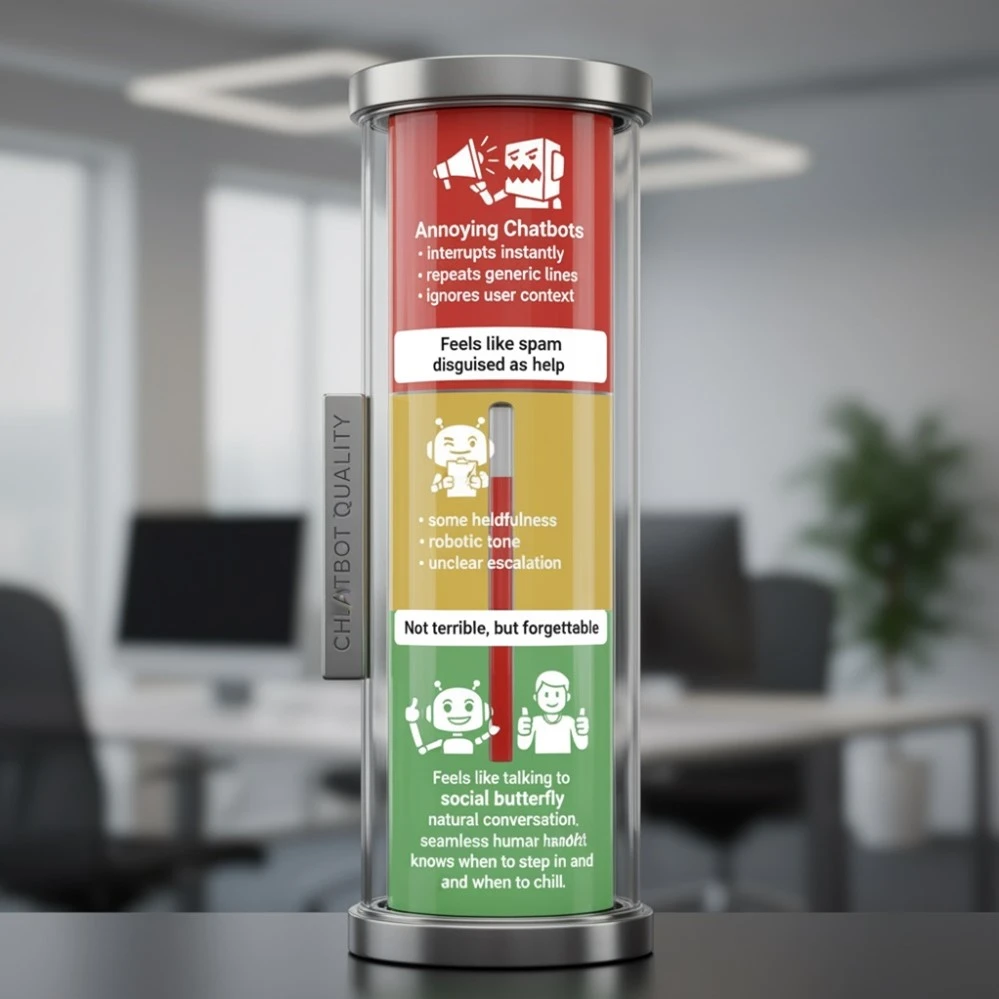
Most chatbots are indeed “annoying”. They jump out the second you land on a page, throw canned lines at you, and then keep looping the same three options like a broken record. It feels less like a conversation and more like being stuck with a telemarketer who won’t hang up.
But that’s not what a chatbot is supposed to be. When it’s done right, it works more like the host of a good party. It knows when to greet you, when to give you space, and when to step in with exactly the thing you were looking for. The conversation feels natural, not forced. You don’t get stuck in endless “press 1 for this” routines, and you don’t have to repeat yourself five times just to get basic help.
The real magic is timing. A smart chatbot shows up when you need it, stays out of the way when you don’t, and connects you to a human the moment it knows you’re ready.
So yes, bad chatbots are annoying. Good ones are invisible in the best way possible. They make things easier, faster, and surprisingly human.
Final Dum Dum Wisdom: Don’t Overthink It
At the end of the day, adopting an AI chatbot for websites means giving visitors a smoother experience, capturing more leads, and helping your team work smarter, not harder. Even this dum-dum can see that’s a win-win.
So, if you’re in the “should I really bother?” stage, here’s your answer: yes. Because if I can explain it, you can definitely implement it.
FAQs
- Do I need coding skills to set up a website chatbot?
No. Most chatbot platforms today are no-code or low-code, meaning you can set them up with drag-and-drop builders and simple integrations. Tech teams can customize them further, but you don’t need to be a developer to get started. - Will a chatbot replace my customer service team?
Not at all. Chatbots handle repetitive, low-value queries and free up your human team for complex, high-value conversations. Think of it as support, not replacement. - How much does it cost to add a chatbot to my website?
It depends on the platform and your needs. Basic bots can be affordable, while advanced AI chatbots with deep integrations cost more. Either way, the ROI usually outweighs the expense because of saved time and higher conversions. - What’s the biggest mistake businesses make with chatbots?
Rushing the setup. If the bot isn’t trained with FAQs, context, and clear escalation to humans, it frustrates visitors. The key is making it useful, not just flashy.